
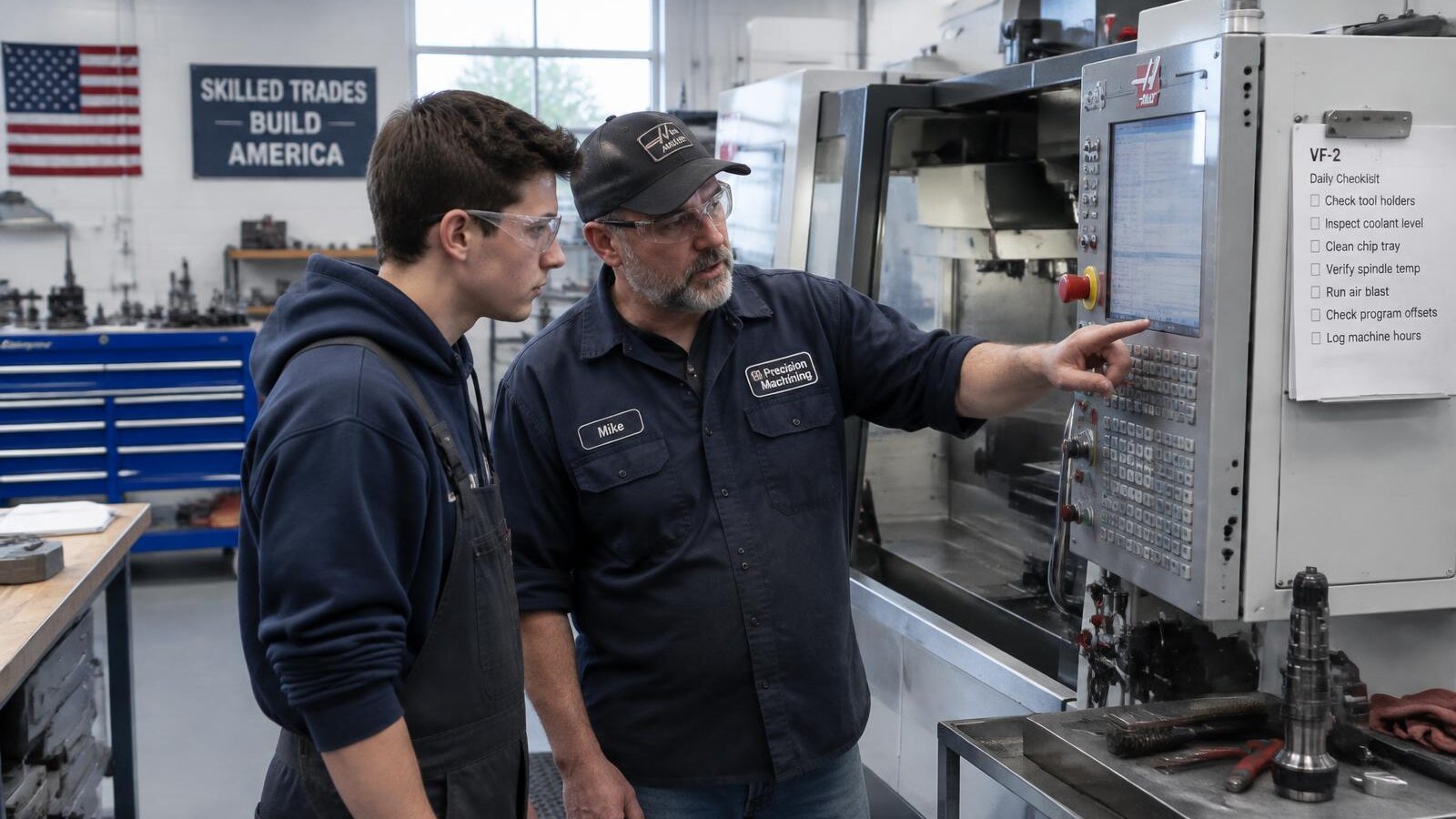
Ask any owner of a small American machine shop what limits growth, and the answer is rarely demand. It is people. Orders are there, machines are there, but the skilled machinist who can set up a five-axis job, read a complex print and hold tight tolerances is hard to find and even harder to keep.
The good news is that small manufacturers have advantages large employers do not: short decision chains, visible impact, and the ability to build a culture where people actually know each other. Here is how to use those advantages.
Stop waiting for the perfect hire
Most shops write job ads for the machinist they wish existed: ten years of experience, every control, every material, available Monday. That person is almost always already employed and well paid. Instead, hire for aptitude and attitude, then train. Mechanical curiosity, reliability and comfort with numbers predict success far better than a long list of controls on a résumé.
Build a simple skills matrix for each role, from deburring and inspection to setup and programming. When you interview, place candidates on the matrix and show them the path from where they are to where you need them. That turns a job into a career.
Build a pipeline, not a posting
The shops that rarely struggle to hire treat recruiting as a year-round activity:
- Partner with your local community college or technical high school. Offer tours, judge projects, and take students for paid summer work.
- Register an apprenticeship program. The U.S. Department of Labor's Apprenticeship program explains how registered apprenticeships work and the funding that may be available in your state.
- Ask your local Manufacturing Extension Partnership center about workforce programs. MEP centers exist in every state and many run training for small manufacturers.
- Offer a referral bonus to current employees. Good machinists know other good machinists.
Pay transparently and fairly
You do not have to match the largest employer in your region, but you do have to be honest. Publish a pay range in every posting, and tie raises to the skills matrix so employees know exactly what moves them up. The Bureau of Labor Statistics occupational data for machinists is a useful starting point for checking your ranges against national figures.
Money is rarely the only reason people leave, but unclear or inconsistent pay is one of the fastest ways to lose trust.
Make the first 90 days count
Many new hires decide whether to stay within their first few months. Give every new machinist:
- A named mentor on the floor, not just a supervisor.
- A written plan for their first 30, 60 and 90 days.
- Early wins: real parts that ship, not weeks of sweeping and deburring.
- A check-in with the owner or plant manager at the end of each month.
The cost of a structured onboarding plan is tiny compared to the cost of rehiring.
Keep people by showing them a future
Skilled people stay where they can keep learning. Rotate machinists across machines, send them to control and CAM training, and give experienced staff time to teach. Recognize certifications publicly. When someone masters a new skill, change their title and pay to match.
Flexible scheduling also matters more than many shop owners expect. Four tens, earlier or later shifts, and predictable overtime can be the difference between keeping and losing a strong machinist with a young family.
Tell your story where candidates look
Young machinists research employers the same way buyers research suppliers. Keep your website current, show photos of your shop floor and team, and list your capabilities clearly. A complete, verified listing on a directory such as USA Manufacturers Directory helps both buyers and job seekers see that you are an established American manufacturer worth working for.
Hiring is not a one-time problem to solve. Treat it like production: a repeatable process you measure and improve every quarter.